The Long Light
18 Months of Hale-Bopp
In 1995, two amateur astronomers independently spotted a faint smudge in the constellation Sagittarius. It was unimaginably distant, yet unusually bright. When its size was calculated, the astronomical community was stunned. For two years, humanity watched it fall toward the Sun, anticipation building as the icy behemoth grew brighter night after night.
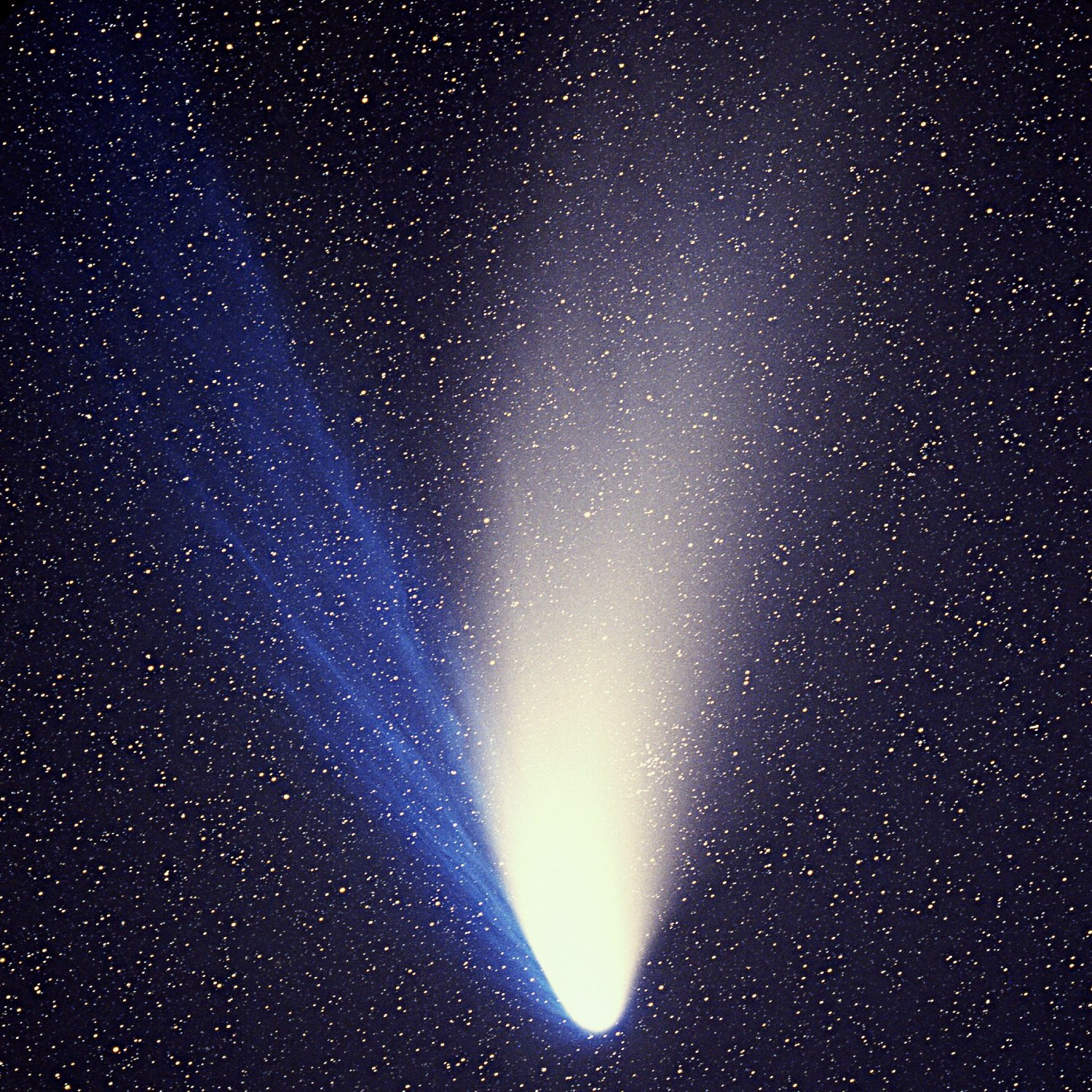
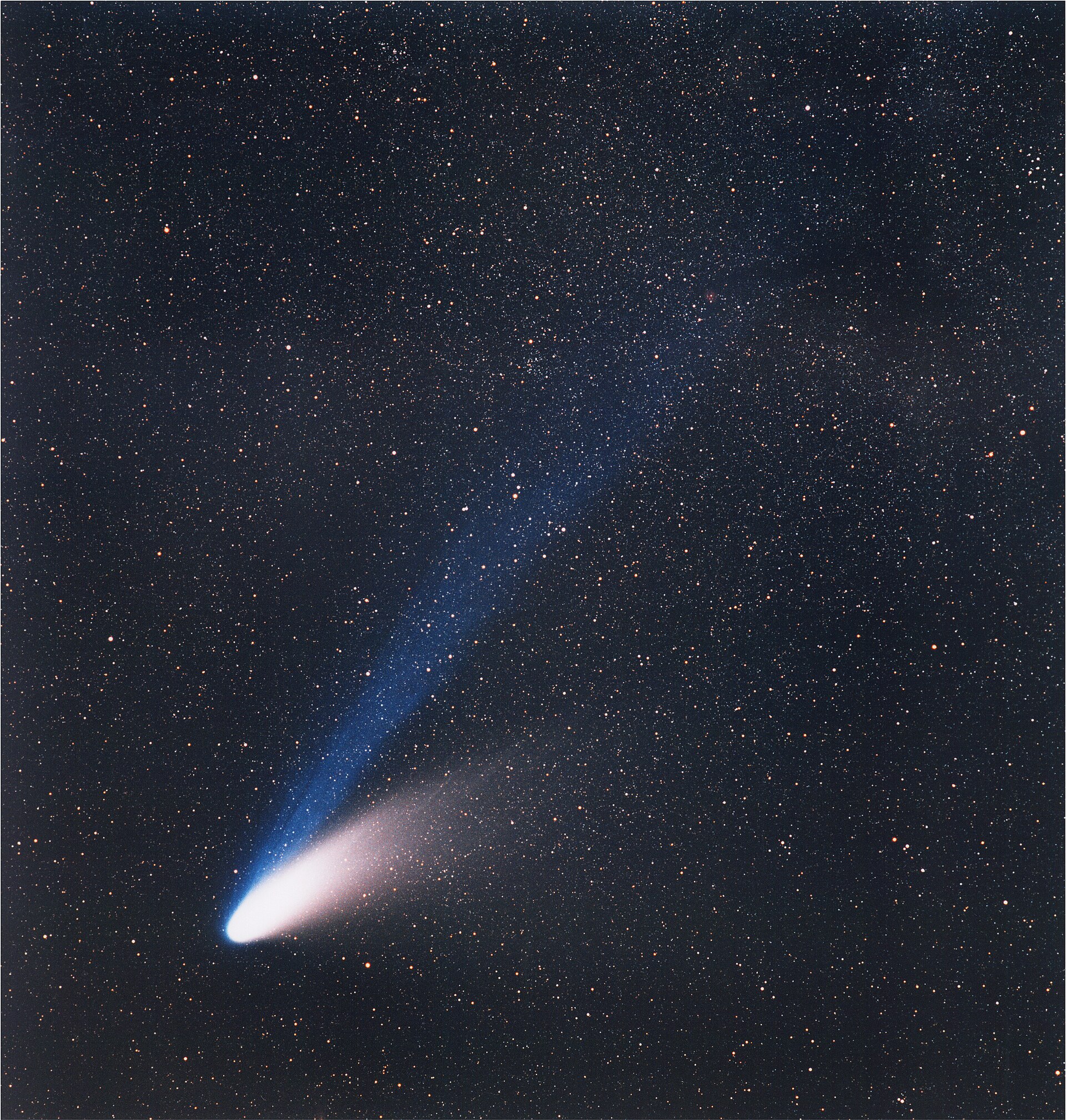
On April 1, 1997, Hale-Bopp reached its closest approach to the Sun. It was a spectacle of staggering proportions. The solar wind and heat stripped material from the massive nucleus, forging two distinct tails that stretched across the northern sky.
Dust Tail
A broad, curving river of amber dust tracing the comet's orbital path through the inner solar system.
Ion Tail
A sharp, structured stream of icy blue ionized gas pointing directly away from the Sun, driven by solar wind.
Where Were You?
Northern Hemisphere dark-sky zones — April 1997
hover or tap a glowing zone
Hale-Bopp defied the ephemeral nature of most comets. It held a commanding presence in the night sky, its dual tails visible without the aid of a telescope for an unprecedented duration. It became a shared global moment, observed by millions before receding into the deep dark.
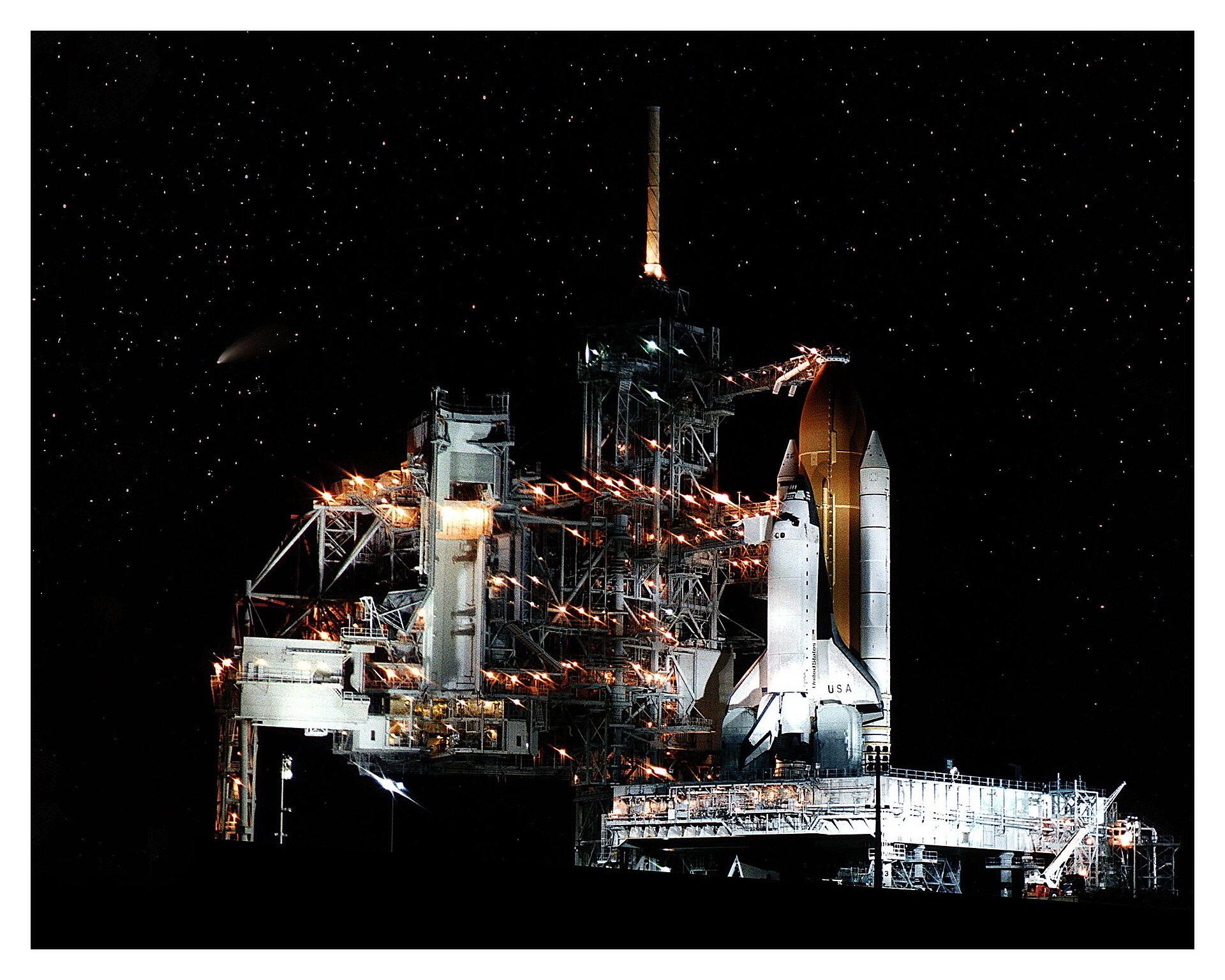
As it finally slipped beyond the reach of human vision, it left an indelible mark. It continues its lonely voyage outward into the Oort cloud, returning to the profound silence from which it came.