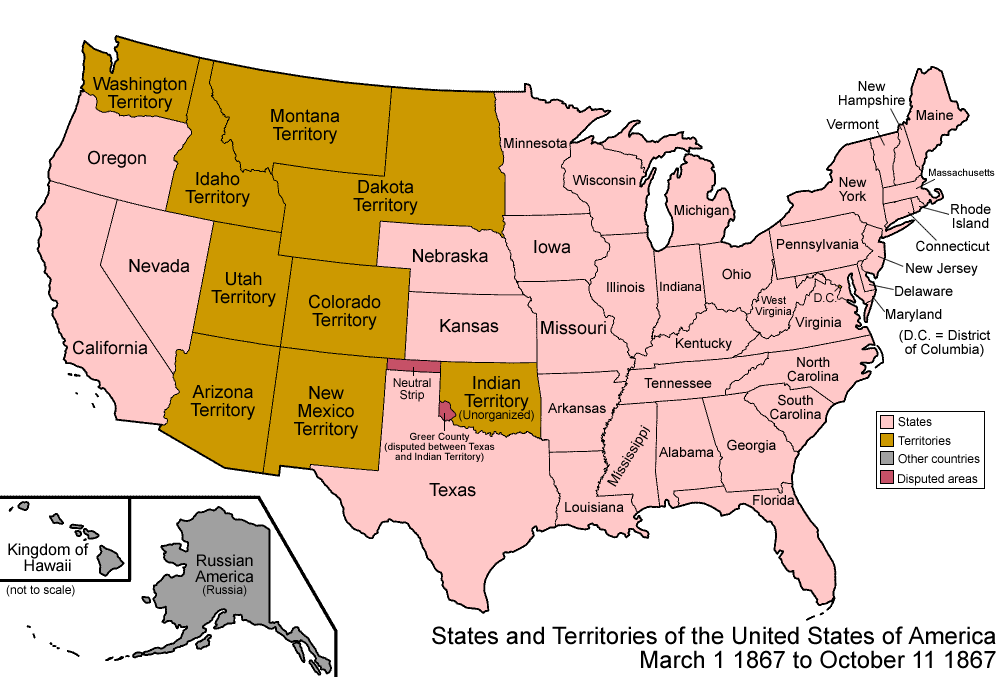
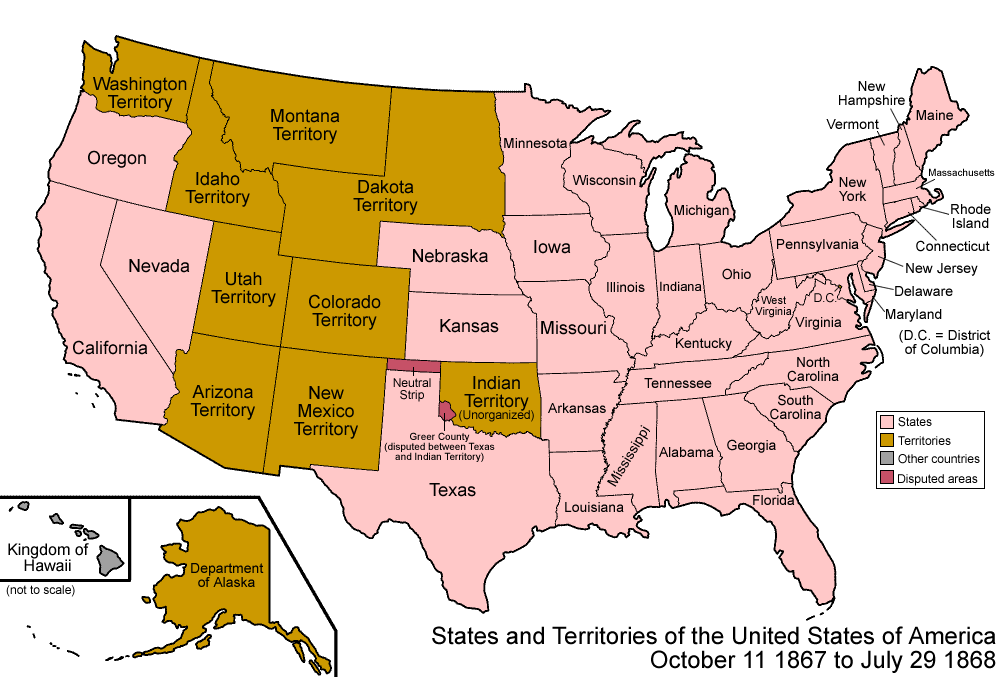
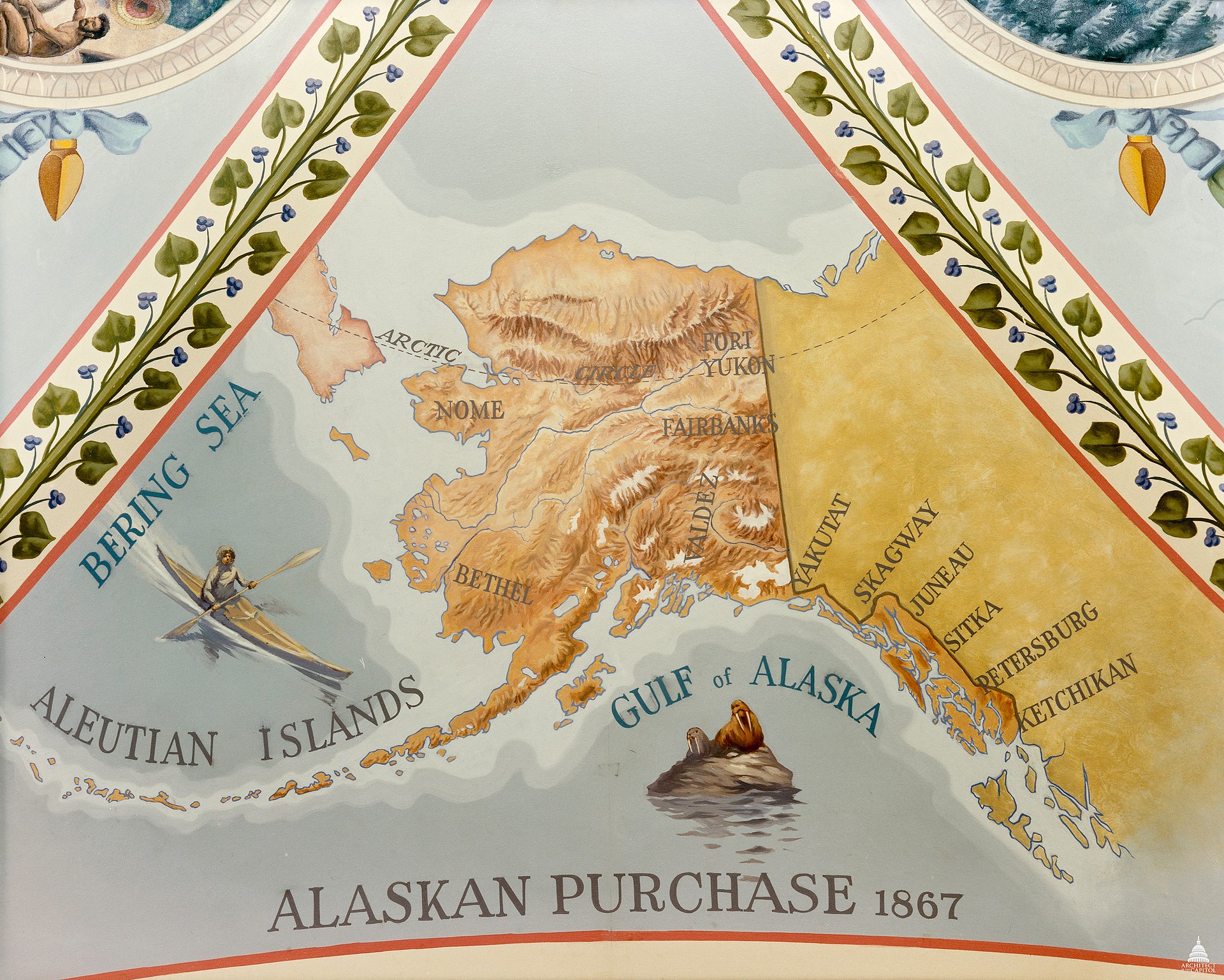
The United States purchases Alaska from Russia
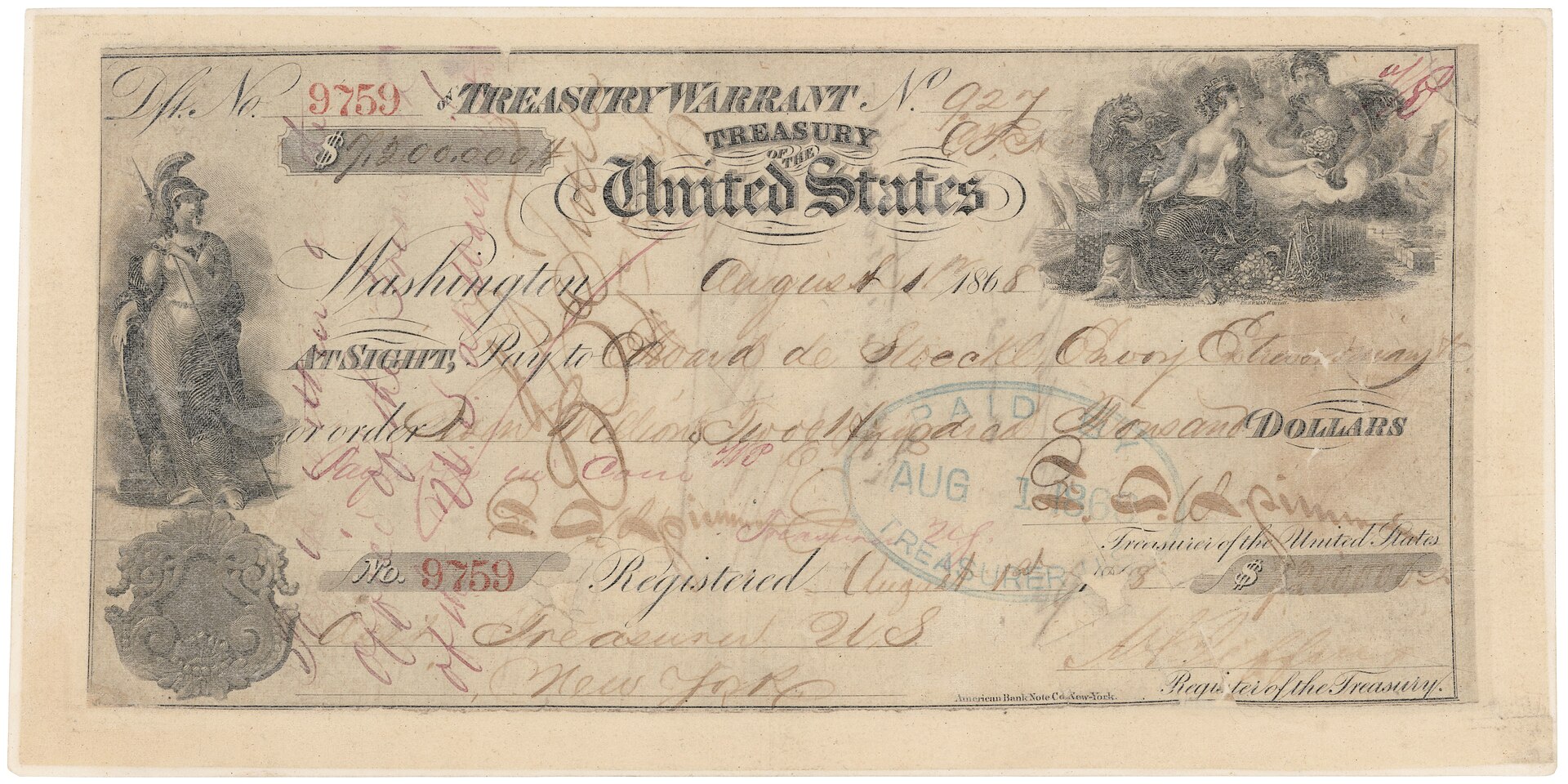
2¢ AN ACRE
On a brisk spring day in Washington, D.C., the United States executed what would become one of the most consequential real estate transactions in human history. For a sum that amounted to less than the cost of a modern postage stamp per acre, Secretary of State William H. Seward secured a land mass larger than Texas, California, and Montana combined.
DRAG THE PENNY
Each penny buys two acres. Drag it across the continental U.S. to feel the scale of the purchase.
← Drag left to right | Swipe on mobile
“SEWARD’S ICEBOX”
The public reaction was far from celebratory. The press mocked the acquisition relentlessly, dubbing the frozen expanse “Walrussia” and “Seward’s Folly.” To the average citizen emerging from the exhaustion of the Civil War, spending millions on a distant, icy wasteland seemed like an absurdity.
Despite the widespread ridicule in the newspapers, the political gears turned. The treaty required the Senate’s approval, leading to a vote that defied the public’s skepticism.
The Ratification Vote
April 9, 1867. A two-thirds majority was required. Hover or tap each senator to inspect the tally.
THE RECKONING
The Klondike Gold Rush. The discovery of gold triggered a massive stampede to the Yukon and Alaska. The “worthless icebox” suddenly yielded unimaginable wealth, paying for the purchase price exponentially in a matter of years.
Strategic Imperative. With the outbreak of World War II in the Pacific, Alaska transformed into a crucial geopolitical stronghold. Its proximity to Asia made it an indispensable military asset, forever vindicating the territory’s geographic value.
Prudhoe Bay. The discovery of the largest oil field in North America definitively silenced any lingering historical critics. The two-cents-an-acre gamble fueled the nation’s energy infrastructure for decades.
SEWARD NEVER LIVED TO SEE THE GOLD.
But time proved the visionary architect of the expansion profoundly, irrefutably right.