_
LOADING... 0%
> BIOS POST... OK > LOADING KERNEL IMAGE... linux-1.0.0.tar.gz > DECOMPRESSING... [####################] DONE > INIT BOOT SEQUENCE... WELCOME.

> INIT BOOT SEQUENCE...

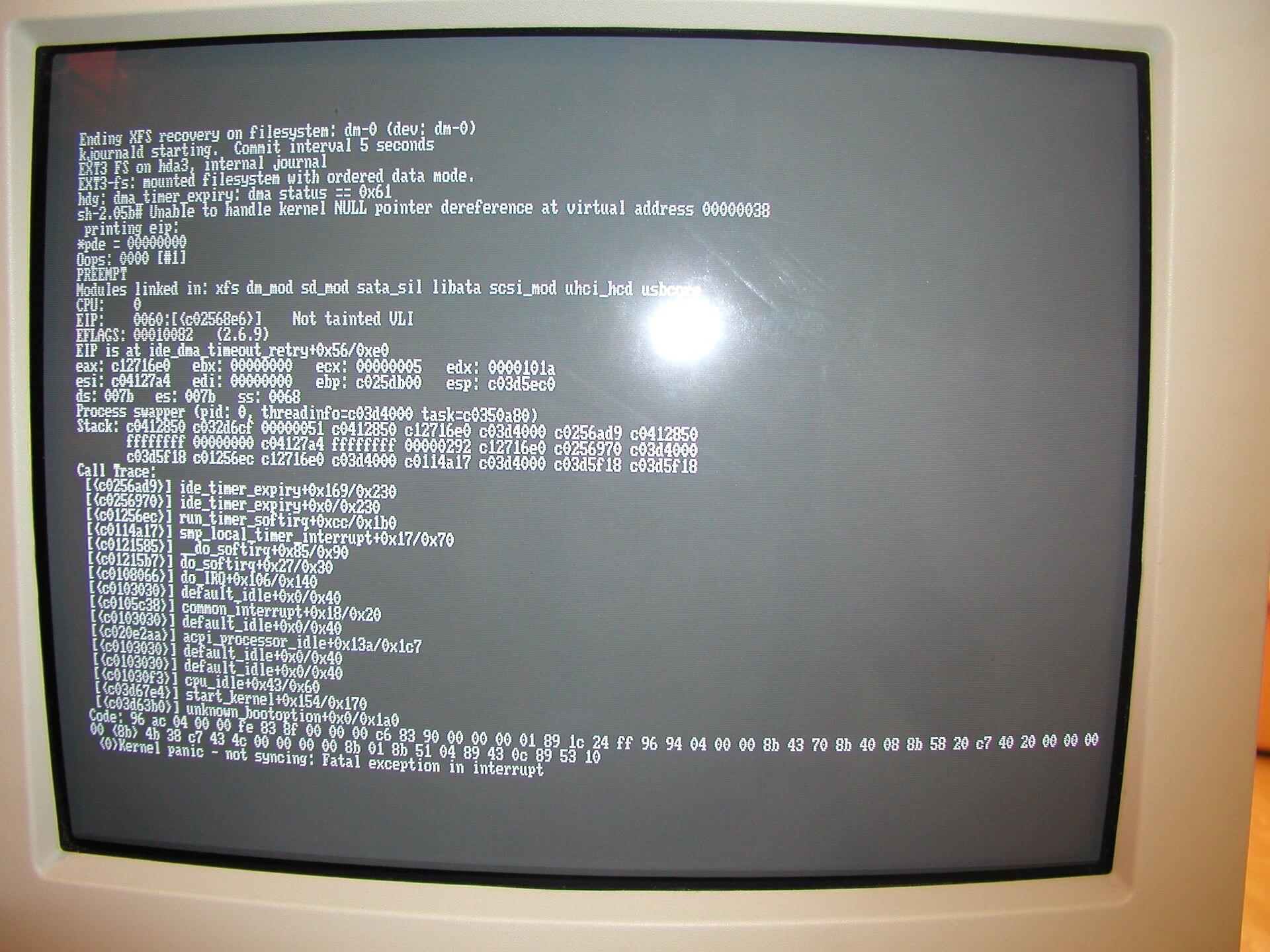
kernel panic:
the birth of everything

1.0.0
1994-03-14

Linux kernel version 1.0.0 is officially released by Linus Torvalds, marking a critical milestone in the history of open-source software. This stabilized release laid the robust foundation for a community-driven operating system kernel that would eventually power much of the world's modern computing infrastructure.

THE CORE

We descend into the architecture of the kernel itself. Torvalds' release gave the world a stable, shared foundation. The monolithic architecture meant all core services operated in the privileged Kernel Space, providing raw performance and hardware control.

Hover over rings to inspect layers.
[3] User Space
Applications, GUI, and User processes operating without direct hardware access.
[2] System Calls
The critical interface layer bridging user applications and the kernel.
[1] Kernel Space
Core OS functions: Process Scheduler, Device Drivers, Memory Management.
[0] Hardware
Physical system components: CPU, RAM, Disk, and Peripheral Devices.

TIMELINE LOG

The evolution of a hobby into an empire. Each commit, each mailing list thread, compiled the community philosophy of open collaboration into reality.
1991-08-25 [torvalds] "Hello everybody out there using minix..."
The famous comp.os.minix post where Linus announces he's doing a (free) operating system (just a hobby, won't be big and professional like gnu).
1991-09-17 [torvalds] Linux 0.01 released
First public release. It had 10,239 lines of code. No networking, limited hardware support.
1992-02-01 [torvalds] Linux 0.12 released (GPL)
The licensing shifts to the GNU General Public License (GPL). A crucial decision that legally guarantees the kernel remains open and free.
1994-03-14 [torvalds] Linux 1.0.0 released
The milestone stabilized release. Supported single-processor i386 systems. Introduced standard UNIX networking. 176,250 lines of code.

LEGACY COMPILE

Servers, phones, satellites, cloud infrastructure — all tracing their lineage back to this moment. The present-day reach.
0%
Top 500 Supercomputers
0%
Global Smartphone OS Share
0%
Top 1 Million Web Servers