Iron Requiem
The last voyage of the Yamato. The sinking of a colossus, and the twilight of the battleship era.
Operation Ten-Go
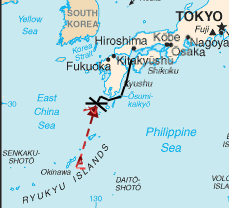
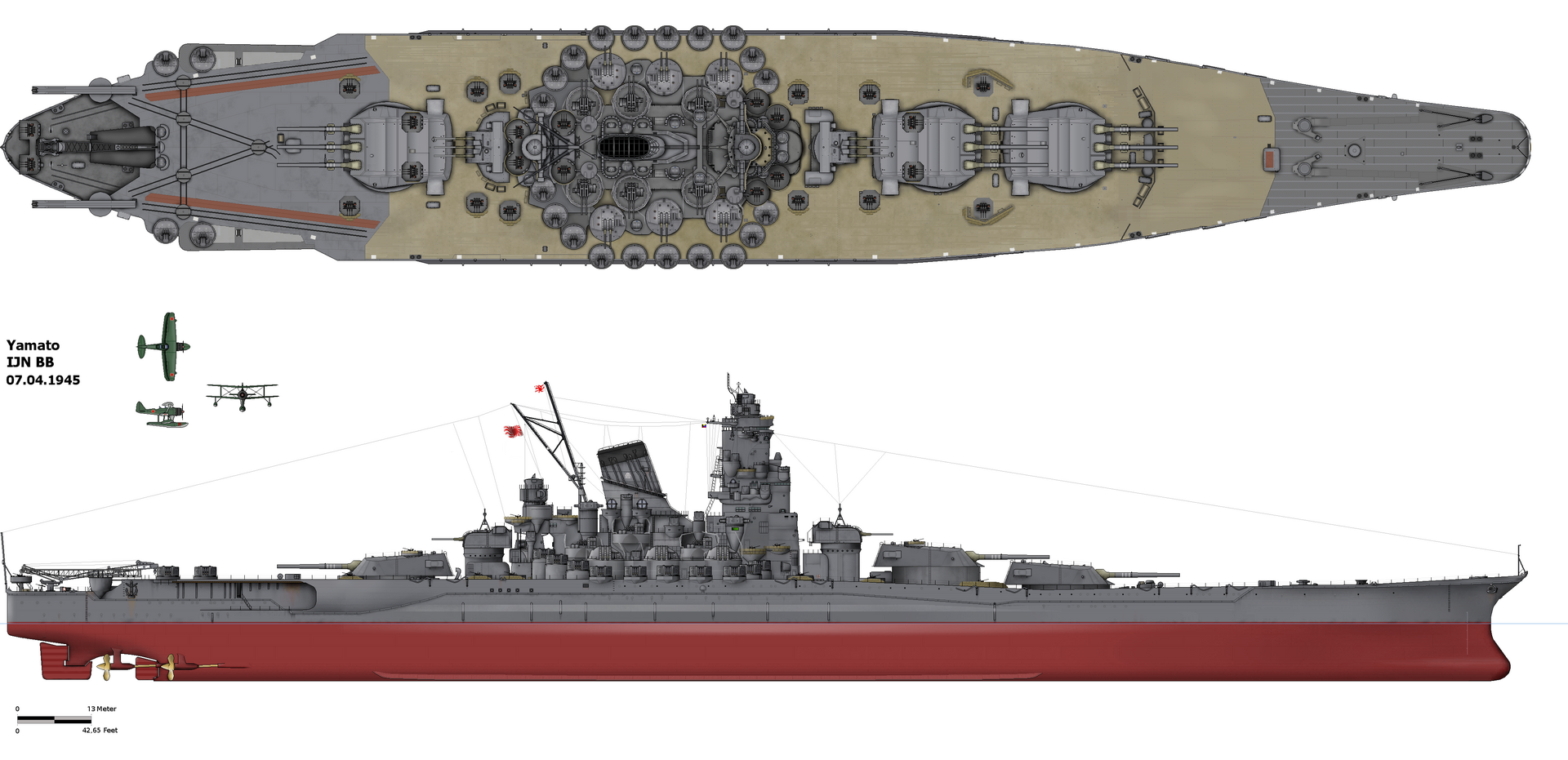
Conceived in the profound desperation of a collapsing empire, Operation Ten-Go was an order that defied strategic logic. The Imperial Japanese Navy dispatched its ultimate deterrent, a vessel kept so secret that its own sailors were unaware of its true dimensions.
Carrying 2,700 men, the Yamato was fueled for a one-way voyage. The directive was absolute: fight through the American blockade, beach the massive hull upon the shores of Okinawa, and act as an unsinkable, static fortress until destruction.
The Sky Descends
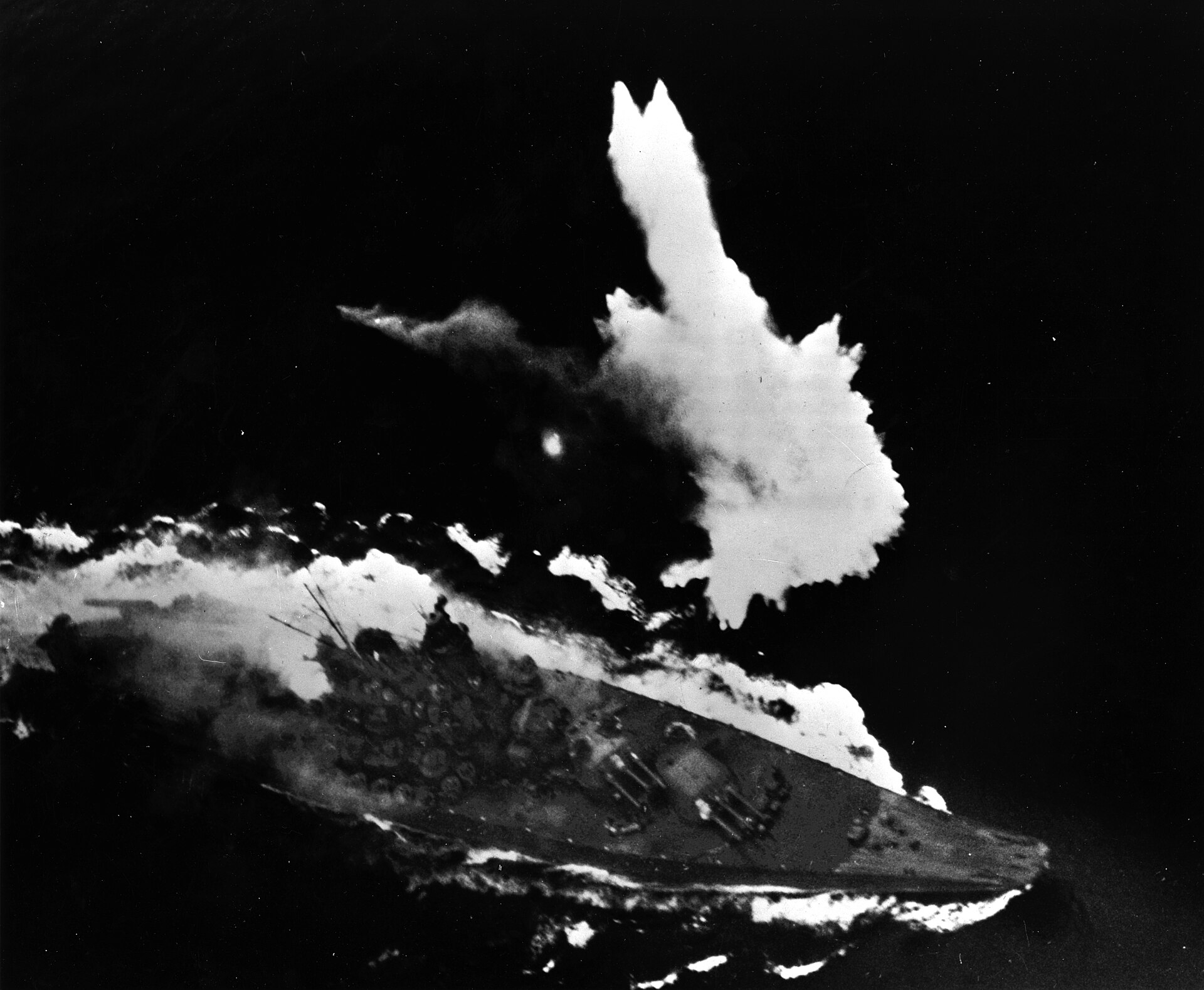
The era of fleet-on-fleet engagements had passed. On the morning of April 7, the Yamato faced an enemy it could not fight on equal terms: the sky itself. A total of 386 American carrier-based aircraft located the unescorted giant in the open waters of the East China Sea.
The First Wave
Task Force 58 launches the initial strike. Armor-piercing bombs strike the superstructure, dismantling the main fire-control systems. The massive anti-aircraft batteries are rendered visually impaired.
Coordinated Torpedo Assault
A second wave focuses exclusively on the port side. Multiple torpedo hits compromise the hull, initiating a severe list. Counter-flooding measures are ordered, drowning hundreds of crewmen in the starboard engine rooms to maintain balance.
Terminal Velocity
The final strike arrives. The ship is listing heavily, its main 18.1-inch guns disabled. Communications are severed. The order to abandon ship is given, though few can escape the internal labyrinth of the dying vessel.
Final Silence
The Yamato capsizes and sinks. Forward magazines detonate in a blast heard 200 km away. A mushroom cloud rises to 6,000 meters. 2,498 men are lost.
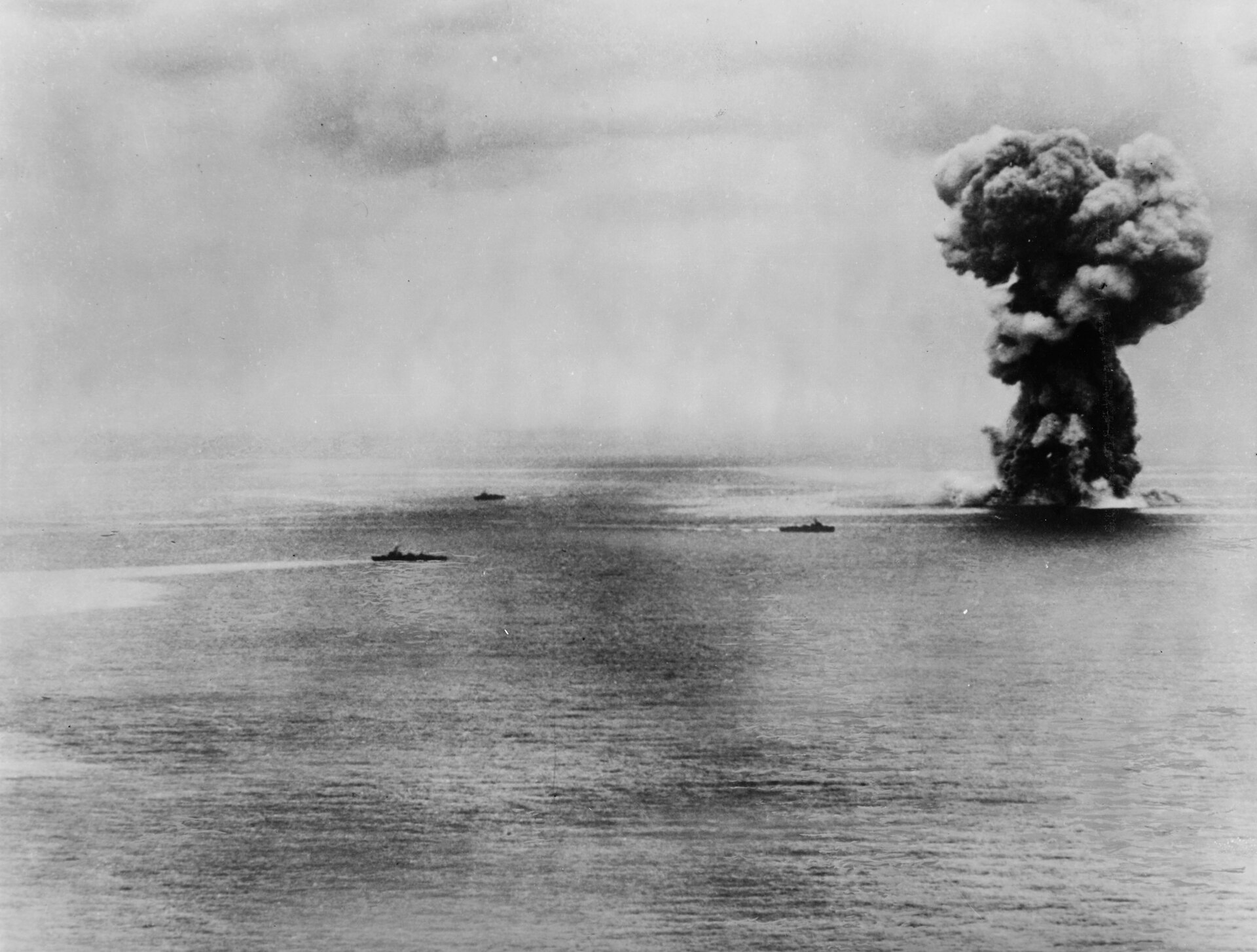
As the Yamato slipped beneath the waves, its forward magazines detonated, tearing the ship apart in a blast heard 120 miles away. It was not merely the destruction of a ship, but the violent punctuation mark on an era of naval warfare.
The colossus built to rule the oceans was swallowed by them, a permanent monument resting 1,120 feet below the surface of the East China Sea.